

Dean, Faculty of Science
The Electron Microscopy Unit (EMU) at Faculty of Science, Kuwait University is the largest and most comprehensive facility of it"s own unique type in Kuwait and considered one of the best in the region fields.
When your research requires a high-resolution image of viral or biological specimens at an ultra structural level or even any material sciences investigation, the EMU offers many options to suit your needs. It allows investigators to visualize normal and abnormal cells anatomy, observe the effects of experimental manipulations on cells and tissues, and examine fine structures for the presence, absence, and quantitation of known microbial or adventitious agents in specimens. Electron Microscopy is vital in supporting process development and in research projects such as full range of Biological specimens; both animal plant and microbial studies and various kinds of solid, semisolid and power materials coming from material sciences groups such as chemistry, earth sciences, physics and engineering.
The Unit offers many custom services such as Ultra-Thin Section Transmission Electron Microscopy of Ultra-Thin Sections (50-70nm), Immuno-Electron Microscopy, Virus Particle Characterization, Scanning microscopy at the variable pressure (low and high ) (Microscope) with Elemental X-ray micro and nano characterization by Energy dispersive spectroscopy (EDS). The unit has also various other highly advanced facilities that does not depend on electrons beam as source of power, however, they run with either laser source such as Laser Confocal Scanning Microscopy (LCSM), or Atomic Force Microscopy (AFM).
Details about each service, including how to prepare samples for submission, are provided in the EMU"s frequently asked questions (yet to come) will be found at our website. EMU provides the investigator with all of the recommended routine reagents and protocols needed to properly prepare their specimens for EM examination.
Our EMU has a wide range of expertise; it is supervised by senior Academic Staff representing various fields of specialty, headed by a Director specialized in electron microscopy field ready for any consultation required by the end-users. Most of the EMU staff have long experience since the establish of the unit in year 1976, and prides itself on the ability to handle unique and custom samples. As each individual sample is unique in terms of overall composition ,way to be examined and observed, all samples are handled using the techniques and protocols which best fit the virus, tissue, cell or solid/powder materials to be examined.
With this in hand, over the years, the EMU has served wide range of users from within the faculty of science, other faculties, outside Kuwait University and even outside the state of Kuwait by offering services as mentioned above and by conducting various workshops and training courses to enhance the abilities of the technical staff, academic staff and outside trainees.
During my tenure-ship as Vice-Dean for Research and Laboratory Affairs, I was very actively involved and supportive to EMU"s all research activities and requirements recommended by Prof Abdel-Majeed Safer (Ex-Vice-President for Research, Present director (5th term, and founder director of present day EMU). I wish to continue my strong support for this highly vital research unit during my tenure ship as a Dean of the Faculty.
We are proud to realize that the EMU is very ambitious in continuing its development with advanced facilities and techniques in order to sustain its leadership in the field of advanced imaging and nanoscopy in the region as it always been.
Dean, Faculty of Science
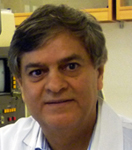
EMU Director
The Electron Microscopy Unit (EMU) is distinguished, state-of-the-art facility at Kuwait University, empowering the institutional resource muscle for high quality scientific endeavors.
Established in 1976 at the Faculty of Science, the facility has steadily grown over 34 years of its existence, to emerge as an unparalleled regional core, on the strength of its ultra-sensitive, equipment and technology resource for pursuing advanced, experimental and in-depth research. At Kuwait University, EMU symbolizes the nucleus of technology sophistication and excellence for institutional academic and research needs, creating an intense, and encouraging environment for advanced and innovative research.
Over the years, EMU"s development has been sustained through strategic plans, facilitating technology acquisitions, improvements and expansions for raising the institutional infrastructure to international standards, for pursuing complex high quality research. Though, EMU"s development remains an enduring mission, it is worth recalling here that the unit"s earliest acquisitions included Zeiss/Opton - EM 9, JEOL, JEM-100CX Transmission Electron Microscope, and JEOL, JSM-840 Scanning Electron Microscope. Its continuous development, thereafter, suffered a major setback, with the unit"s virtual destruction during the Iraqi invasion on August 2, 1990, which completely damaged and ruined the facility, and halted all scientific and research activities. But, soon after the redevelopment process in 1991 marked a major attempt towards putting the facility back on track, with the post liberation realties imposing the need for re-envisioning the EMU"s infrastructural assets, and strategy for redesigning EMU premises at the newly allocated site at the Faculty of Science.
This venture, also opened the door for re-assembling advanced equipment resources, covering wide-ranging microscopy instruments, to facilitate Biological and Material Science research. The major acquisitions during this phase included, JEOL, JEM-1200 EXII Transmission Electron Microscope with a resolution of 0.34nm and screen magnification of X 600,000, attached Roentic EDS System and Gattan digital imaging system. JEOL, JEM-3010 HRTEM High Resolution Transmission Electron Microscope, with a resolution of 0.17nm and screen magnification of x 1.5 million, attached with Roentic EDS system and Gattan digital imaging system. JEOL, JSM-6300 Scanning Electron Microscope attached with Roentic LN2 EDS system and Bruker"s Nano SDD Technology dry detector EDS system with an imaging resolution of 16 mega pixels. Also available are JFD-9010 Freeze-Fracture machine, Leica Ultracut, Leica Ultracut FC-S Ultramicrotomes, Glass Knifemakers, Leica Tissure Processors, Leica EM and UltroStainer, Leica Cryo-Station, Balzer"s Sputter Coater SCD 050, Balzer"s Critical Point Dryer CPD 030, and Vibratome 1000. Apart from advanced instrumentation, EMU has special labs for biological and material sciences preparations. Two fully equipped interconnected Darkrooms, as well as two fully equipped Ultramicrotomy labs, of which one is equipped with a video camera and a TV monitor for teaching purposes, further complementing the EMU"s resources and technology potential.
The Electron Microscopy Unit was integrated with the Science Analytical Facilities (SAF) of the Faculty of Science, in 1996, which further boosted the institutional capabilities and capacity for high quality research and scientific advancement, especially in the sphere of microscopy. The Unit continues to play a critical role in rendering vital support in the sustenance of highly sophisticated and advanced research in biological and material sciences, providing the researchers with state-of-the-art electron microscopy instrumentation, as well as in rendering consultative services. The Unit is heavily used by the faculty academic and research staff, as well as postgraduate students, pursuing high quality scientific endeavors that continue to perplex and challenge science and scientists, especially in structural biology, chemistry, and material sciences research.
EMU"s infrastructural development during the five year plan 1999-2004, led to networking of the facility, including the provision of internet, intranet, computer and server labs, computer workshop, and audiovisual hall. The simultaneous acquisition, calculations and analysis of crystallographic electron microscopy facilities also occurred during this phase, with the unit attaining advanced Calidris software for structural chemistry, while the framework for an exclusive EMU website evolved.
In addition, the EDS systems were replaced in all existing microscopes, with the latest RONTEC EDS technology, together with the coloured SEM, for attaining coloured SEM images by X-Flash dry detector 127 ev and Multimax for qualitative and quantitative analyses of both Biological and Material sciences samples.
The development process continued thereafter, with the EMU acquiring cutting edge technology with its latest acquisitions including advanced Nanotechnology, the most sophisticated Microscopy technology in the world, through the acquisition of NanoScope multimode Atomic Force Microscope, with a resolution of 1 nm, and the Laser Confocal Scanning microscope. EMU further added a significant dimension to its equipment assets with the installation of Variable Pressure Remotely Operational Field Emission Scanning Electron Microscope, fitted with the Rontec EDS and high resolution Cryotransfer System. This microscope is fully computerized, and has a resolution of 1 nm. In the year 2005, the president of Kuwait university - in the presence of Vice-presidents, Faculty Deans, professors, local and foreign media all Kuwait university"s administration.
Through the use of Variable Pressure Remotely Operational Field Emission Scanning Electron Microscope, opened the very first remote microscopy facility in Kuwait and the region at large.
At this juncture, EMU assets are competitive and one of the best in the world, easily compatible with internationally defined standards as the Center of Excellence in the World of Electron Microscopy, and NanoScopy in Kuwait, the Region, and the wider world. Further enrichment of this resource would remain the key driving force in continuous expansion and sophistication of this resource, as an enduring mission for KU to spearhead advanced research, with the inclusion of advanced imaging facilities, other than "electrons," such as "Helium ion source" (e.g. Helium ion beam microscope), "sound wave source" (e.g. scanning acoustic Microscope), "x-ray source" (e.g x-ray microscope), ion-beam source and energy-filtered TEM with electron-energy �loss spectrum (EELS) etc. These major imaging systems figure high on EMU"s priority acquisitions, earmarked for the coming 5-year plan.
(EMU Director)